

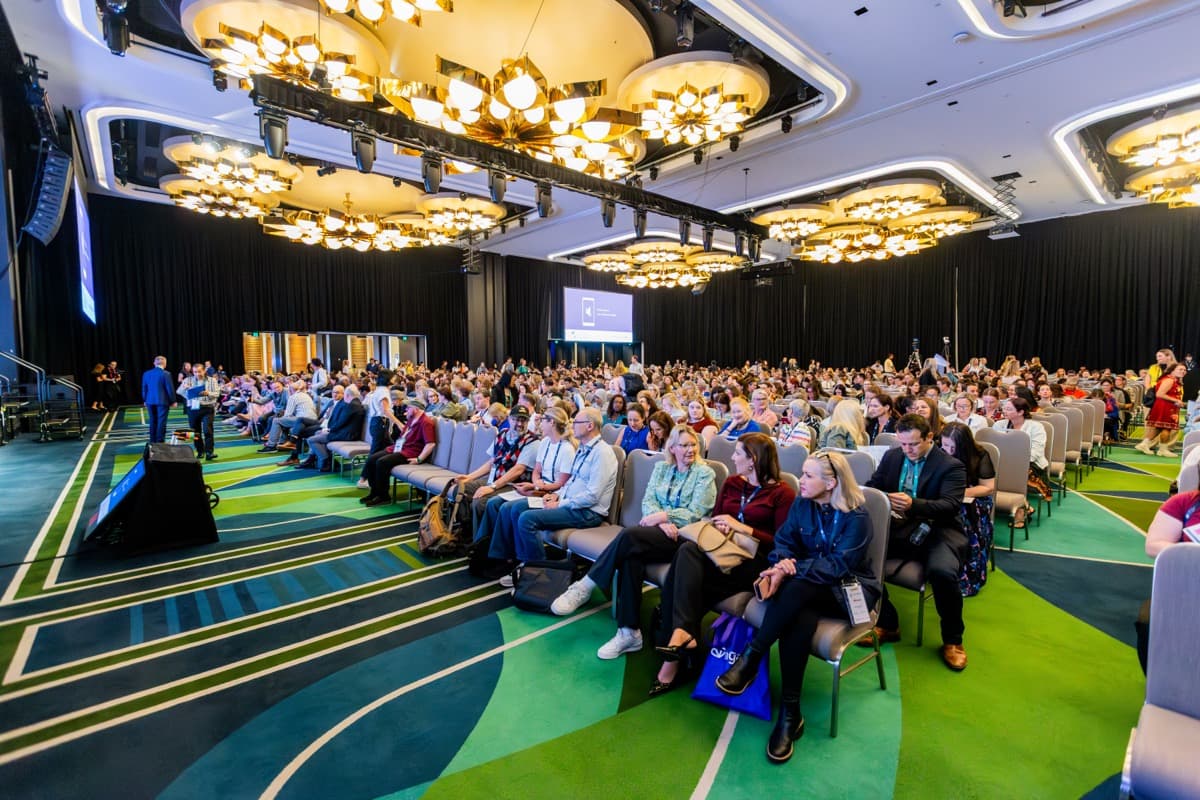
Association events are different — your software should know that
If you manage events for an association, you've probably had this experience: you sign up for an event platform, start configuring it, and within twenty minutes you're looking for workarounds. Member pricing tiers. CPD tracking. Abstract review committees. Multi-year exhibitor relationships. None of it fits neatly into a tool designed for someone running a one-off product launch.
That's because most event software is built for standalone events. Your events aren't standalone. They're part of an ongoing relationship between your organisation and its members — and that difference changes everything about how the software should work.
CPD/CE tracking is not optional
In medical, legal, accounting, education, and technical fields, members often attend events specifically to earn continuing professional development or continuing education credits. This isn't a nice-to-have line item on a post-event report. It's part of the member promise. Members need records and certificates. Your organisation needs a clear account of who completed which activity and what they earned.
Most event platforms handle attendance tracking at the event level: someone checked in, someone didn't. Association events need more than that. Credits may come from live sessions, workshops, watched recordings, check-ins, forms, assessments, and approved manual adjustments. Those activities may sit across multiple events and programmes.
If your current tool can't do this, your team spends days manually matching activity records to member profiles. That's not a minor inconvenience. It's a structural mismatch between your workflow and your software.
CPD/CE is not complex or costly when the records are connected from the start. It becomes complex and costly when your team has to reconstruct the truth afterwards.
Member vs. non-member pricing is more than a discount code
Generic platforms give you ticket types and promo codes. Association events need conditional pricing that understands membership status, membership tier, early-bird windows, and sometimes eligibility rules tied to specific sessions or tracks.
A member who registered late should still pay less than a non-member who registered early. A student member might get access to the main programme but not the workshop track. A lapsed member renewing at registration should get the member rate applied retroactively.
These aren't edge cases. They're Tuesday for an association event manager. And building them out of discount codes and manual overrides is fragile, error-prone work that breaks every time registration volume picks up.
Your conference isn't a one-off — stop rebuilding it every year
Most associations run the same core conference annually. The format evolves, the content changes, but the structure — registration categories, session types, committee roles, exhibitor packages, task checklists — carries over year to year.
Generic event tools treat each event as a blank slate. You create a new event, configure everything from scratch, and hope someone documented last year's setup well enough to replicate it. The institutional knowledge lives in someone's head or a shared folder that three people have conflicting versions of.
What associations actually need is the ability to clone last year's event as a starting point, carry forward the structural decisions that worked, and adjust what didn't. Not just the schedule template — the registration rules, the committee assignments, the exhibitor relationship history, the sponsor tier structures.
Committee-driven decisions need committee-driven tools
Association events are rarely planned by a single person making unilateral decisions. There's an abstract review committee scoring submissions. A programme committee building the schedule. A board approving budgets and keynote invitations. Sometimes an exhibitor advisory group providing input on floor plan layout.
This committee structure means your event platform needs proper workflow support: assign reviewers, collect scores, manage conflicts of interest, track decisions with an audit trail. If your abstract review process involves emailing PDFs to twelve people and collecting scores in a spreadsheet, you're doing the work your software should be handling.
Exhibitor and sponsor relationships span years, not events
When an exhibitor books a booth at your annual conference, that's not a one-time transaction. It's part of a multi-year relationship. They had booth 47 last year and they expect first right of refusal this year. Their sponsorship package includes benefits that span the annual conference and two regional events. Their account manager at your organisation needs to see the full history — not just this year's booking.
Generic tools track exhibitors per event. Association teams need to track exhibitors per relationship: what they've booked across years, what they've spent, what commitments carry forward, and what conversations have happened between events. The same applies to sponsors — their packages are often annual agreements, not single-event purchases.
What this looks like in practice
ema was built with these workflows in mind. CPD/CE Management tracks credits across live sessions, workshops, watched recordings, check-ins, forms, assessments, and approved adjustments. Members can see their CPD log and download certificates. Public verification gives employers, accrediting bodies, and association staff a way to check certificate authenticity. Registration supports conditional pricing rules based on membership status, not just ticket types and promo codes. Event templates let you clone your annual structure and carry forward what worked. Committee workflows handle abstract review with proper scoring, assignment, and decision tracking. And exhibitor and sponsor records persist across events, so your team sees the full relationship history, not just this year's booking.
None of this is exotic. It's just what happens when you build event software that understands how associations actually work, rather than assuming every event is a standalone occasion with no past and no future.
If you've been forcing your association's workflow into tools designed for one-off events, the friction you're feeling isn't your fault. It's a tooling problem — and it's solvable.